Wednesday, March 6, 2013

When American airlines profit 21 cents per passenger


Image Source: wired.com


Although the aviation industry appears to be strong, profit figures and the paper trail of financial statements show that its components have not been as consistent as they might appear. In fact, in the past few decades, many of the airlines have turned out a loss at the year-end review. This was due to a number of factors, including starting off with a niche market or competing against much cheaper travel alternatives like ships, trains, and other road vehicles.


Image Source: casnocha.com


With the rise of the average American’s purchasing power– and interest in seeing other parts of the country and the world– the airline industry’s profitability seems to have stabilized. In the last decade, an increasing number have reported end-of-year profits and record revenue. Just last year, the year-end financial statements of 10 airlines reported full-year results, garnering a combined profit of $152 million. However, a closer look at the figures and a quick calculation of the number of seats sold in 2012 reveal some rather disconcerting information: the profit from revenue of these 10 airlines falls around 0.1 percent, which means for each passenger they carried, America’s top-grossing airlines made an appalling 21 cents.


Image Source: pilotjobs.atpflightschool.com


Surprisingly, that was not the worst profit record for the industry. Although airlines are still in their infancy in terms of the profit they generate, they have been present and in-demand for decades, and– with travel becoming increasingly necessary for work and everyday commute– are clearly not about to become obsolete.


What airlines profit reflects down the supply chain, as Hamilton Sundstrand’s CFO, Eric Visselli, might know. Read more about his insights on the airline industry on this website.

Thursday, February 7, 2013

Making compromises work in the business setting

In the corporate world, many professionals see an unbending will as a sign of strength and commitment to a purpose. Given this, managers who compromise to solve business issues are predisposed toward the receiving end of negative views. People are likely to think that managers who strive to keep both sides happy suffer from a lack of conviction.
Image source: czamora1052.wordpress.com
John Baldoni, the president of the coaching and leadership firm Baldoni Consulting, maintains that the opposite is actually true.

The ability to compromise is inherent in leaders with a strong conviction to give priority to the organization. Apart from this, it is also important for business leaders to be able to see the merits of the arguments offered by the other party. It is sometimes difficult to see the good in opinions that differ from one’s own and this is where giving priority to the interests of the organization helps.

Image source: zimbio.com

While it sounds easier to do in theory than in practice, there are ways for managers to make the process smoother. A manager should ask others-- for their views to better understand the issue on hand. They see the bigger picture and their actions communicate a willingness to listen, which helps establish trust.

Image source: news.everest.ca

The most important thing to have in a situation that requires compromise is respect. Maintaining respect throughout the discussions allows professionals to argue for their views without taking things personally. Compromise may not immediately be possible but, through a protracted approach, it can eventually be achieved.

Eric Visselli is the chief financial officer of Hamilton Sundstrand. Find more insights on good business practices on this: online journal.

Sunday, January 20, 2013

Inside the Boeing 787 Dreamliner

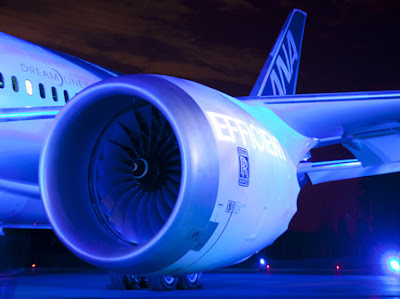
Boeing’s newest, the 787 Dreamliner, was the most anticipated new airplane of 2012. It is perceived to be the world’s most fuel-efficient airplane, being the first major airliner to use lightweight carbon fiber composite materials for most of its construction. The long-haul carrier can seat anywhere from 210 to 290 passengers in its mid-sized wide body but consumes 20 percent less fuel than the similarly-sized aircraft, like the Boeing 767.


Image Source: blogspot.com


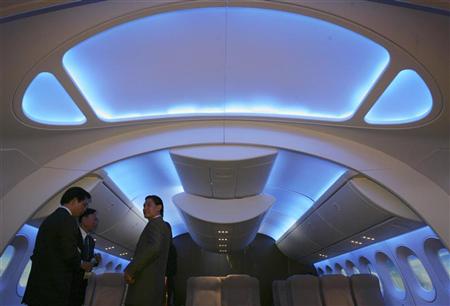
The Boeing 787 Dreamliner made headlines as one of the few airplanes that were developed with the passenger’s comfort and flight experience on top priority. In addition to its unparalleled fuel efficiency, the 787 is built with cutting-edge technology and top-of-the-line comfort. A decade in the making, the 787 Dreamliner can measure turbulence and automatically adjust to counter-balance the movement, therefore avoiding the extreme vertical lifts and dips that cause motion sickness among passengers. Unlike other Apple-biased planes, the Boeing 787’s in-flight entertainment system caters to a wider range of electronic devices– and can host several at the same time to ensure passenger amusement during long-haul flights. Passengers who like the view not only can enjoy larger windows, but also can easily dim the tint with the touch of a button.


Image Source: aviationnews.eu


Pilots rejoice over the aircraft’s state-of-the-art flight deck: featuring clear screens for overhead displays so pilots can simultaneously read data while looking through the screen and out the window. New electronic “flight bags” eliminate bulky paper manuals, charts, and other data which have been lost or damaged on other airlines in the past.


Image Source: b-inet.com


Hamilton Sundstrand was the largest system supplier to the Boeing 787 Dreamliner production. This website discusses the role CFO Eric Visselli has played in the production of other aircraft.

Thursday, November 29, 2012

REPOST: Indonesia certifies Russia’s Sukhoi jet as safe to fly in country 6 months after crash

This article from The Washington Post talks about the Superjet, a Russian passenger jet, and its recent certification just months after a similar model crashed during a demo flight in Indonesia.

Indonesia has certified a Russian-made passenger jetliner as safe to fly in the country six months after the same model crashed into a volcano during a demonstration flight, an official said Wednesday.

The Sukhoi Superjet-100 was deemed airworthy last week by the country’s general directorate of civil aviation, said Transportation Ministry spokesman Bambang Ervan.

The certification was based on a thorough validation process and has nothing to do with the crash investigation that’s still ongoing, he said.

“It was granted after a careful validation process, which found the type has met all required standards,” Ervan said.

In May, a Sukhoi Superjet-100 crashed into Mount Salak, a dormant Indonesian volcano, during a demonstration flight to impress potential buyers, killing all 45 people aboard.

Masruri, head of the Air Transportation Safety Division, said the investigation into the crash has been completed and the results are expected to be announced as soon as next month. He declined to provide any additional details. Like many Indonesians, he uses only one name.

Meanwhile, Sunaryo, an official from Sukhoi’s representative office in Indonesia, PT Trimarga Rekatama, said the certification will allow delivery of the aircraft to its first customer in Southeast Asia, the Indonesian airline Sky Aviation, which has signed a deal for 12 planes.

He added that the first delivery is expected to arrive before the end of the year.

Another Indonesian company, Kartika Airlines, also ordered 30 aircraft, but the fate of that deal is not clear following the crash, Sunaryo said.

The Superjet is Russia’s first new model of passenger jet since the fall of the Soviet Union two decades ago and is intended to help resurrect its aerospace industry.

Tuesday, November 6, 2012

Flying together: Eric Visselli and partnering with the sky's giants

Eric Visselli Image Credit: cbc.ca


Eric Visselli is the Chief Financial Officer of Hamilton Sundstrand Auxiliary Power Systems, a subsidiary of the United Technologies Corporation that supplies aircraft power supply systems to major providers of the aviation industry.
 

Air travel has evolved several times since its beginnings early in the twentieth century. At first, boarding a plane that soars over mountains and crosses seas was reserved for the privileged, whose cabins were retrofitted for the needs of the people of their class. Then multi-class cabins that provided seats and amenities that depended largely on a passenger’s ability to pay were crafted. Eventually, budget carriers began taking off, making flying an accessible mode of transportation.


Eric Visselli Image Credit: flightglobal.com


Eric Visselli has been witness to the evolution of aviation, and must have ascertained that one factor remains constant despite the progress of the industry. For so long as aircraft are allowed to take off with people on board, the plane must be well-equipped and adequately powered from the moment it taxies off the runway until it touches down on its port of destination.


Recently, leading power systems provider Hamilton Sundstrand signed on with two major airlines for long-term partnerships that place Hamilton Sundstrand’s premium products in the airlines’ respective Embraer and Airbus fleets. Muscat-based airline Oman Air has signed on to have the company’s APS2300 Auxiliary Power Unit (APU) installed in its Embraer fleet, while the Turkish Onur Air had the same product installed in its stable of Airbus craft.


Eric Visselli Image Credit: omanair.com


The APS2300 APU may be found in 800 Embraer craft of various models, while the same may be found in more than 1,700 Airbus craft the world over.


Read more about Eric Visselli through this Facebook page.

Thursday, October 4, 2012

Eric Visselli: Design, manufacture, support

Eric Visselli Image Credit: flightglobal.com


As chief financial officer of aerospace and industrial name Hamilton Sundstrand, Eric Visselli is actually overseeing three companies, each with particular industrial capabilities. Their acquisition has proven an expansive strategy for Hamilton Sundstrand, which saw its range of services and products extend in application across diverse industrial processes.


Sundyne alone has its own base for designing, manufacturing, and maintaining sold products used in key industries such as petrochemicals, food and beverage, and pharmaceuticals. The Colorado-based company facilitated Hamilton Sundstrand’s entry into these industries, diversifying its profit-yielding portfolio heretofore focused on aerospace, defense, and industrial technologies.


Eric Visselli Image Credit: mattrichgdes.files.wordpress.com


The three companies under Hamilton Sundstrand also roll out similar products such as pumps and compressors. Sundyne specializes in these, but with its own variety. As opposed to Sullair, Hamilton’s go-to for rotary screw compressors, Sundyne offers high-speed centrifugal pumps and sealless types for special engineering needs. Eric Visselli, the finance officer under whom Hamilton Sundstrand has realized a $20-billion profit, won’t be hard-pressed to surpass last year’s business targets and this year’s impressive profits with such a flexible supply chain.


There is also reason to be optimistic about Hamilton’s acquisition of Sundyne. The company is continually seeking global entry points to expand its operations and markets. Its strong propensity for growth, along with its profit outlook, should please Hamilton.


Eric Visselli Image Credit: hamiltonsundstrand.com.sg


Know more about Eric Visselli and Hamilton Sundstrand by visiting this Facebook page.

Thursday, September 6, 2012

Eric Visselli and a timely geekfest over the Embraer aircraft series

Hamilton Sundstrand Chief Financial Officer Eric Visselli could hammer out beautiful balance sheets for longer. Last July, his company sealed an agreement with Oman Air for the maintenance of the APS2300 Auxiliary Power Unit (APU) installed within the airline’s Embraer 175 series crafts.

Eric Visselli Image Credit: saudigazette.com.sa

The partnership is exciting for many reasons. Oman Air is taxiing as an internationally recognized, reliable passenger airline, and the Embraer 175 series has been a commercial success since its Paris Air Show debut in 1999. The aircraft model is known for a lanky, 80-seater frame that lends an aura of sleekness and speed. Miraculously, the narrow body is also a host for the luxurious passenger service amenities within and advanced aviation engine systems, of which the APS2300 APU is a part.

Eric Visselli Image Credit: blogs.mcgill.ca

The sweeter side of the contract is right up the alley of Eric Visselli, who will be managing the long financial relationship with Oman Air. With the latter gaining brand cred as a passenger airline in the Middle East, East Africa, and Asia, Hamilton Sundstrand Power Systems is set to pad further its 2011 6.2 billion-dollar revenues as firm-overseer of all APS2300 APUs aboard Embraers.

Eric Visselli Image Credit: omanair.com

Hamilton Sundstrand is also the mother of the APS2300 APU, which represents the breakthrough engineering of modern planes for longer and faster flights. It is one among the many heavy-industry contributions of Hamilton Sundstrand to aviation, aerospace, and transportation systems.

Learn more about Eric Visselli and Hamilton Sundstrand Power Systems by visiting this Facebook page.